- DCIST's Newsletter
- Posts
- Door County Invasive Species Team Newsletter
Door County Invasive Species Team Newsletter
December 2025

DCIST Coordinator
December 01, 2025
Table of Contents
Closing the Season, Planning for What’s Next
With the field season now behind us, DCIST staff are turning their focus to analyzing the inventory and treatment data collected by our dedicated seasonal team. This winter, we’ll be assessing how our efforts against priority invasive species are progressing. Look for an update in an upcoming newsletter on the outcomes of these evaluations. We’re also excited to share progress on the wood inventory project, with all collected data set to be available on the Door County Web Map in early 2026. Additionally, our team is preparing educational workshops funded by the Wisconsin Coastal Management Program grant, with the first session for late January - details and registration will be shared soon. To continue this vital work, DCIST is actively seeking additional grants, as our programs rely entirely on competitive state and federal funding.
As the year ends, we hope you’ll keep DCIST in mind and consider supporting our efforts through a donation. Community generosity helps bridge funding gaps and secures the future of our invasive species management and out reach programs. Without consistent funding, the scope of DCIST’s work would be significantly reduced. Your support ensures we can continue protecting Door County’s natural areas. Support our work here: https://doorinvasives.org/donate
Native Species Highlights
Winter Wonders: Native Plants That Shine
Native plants don’t stop working for wildlife when the growing season ends - in fact, many of them really shine in winter. Colorful berries, textured bark, seed-filled flower heads, and sturdy stems create beauty in the quiet months while offering critical food and shelter for birds and overwintering insects. By leaving native shrubs, grasses, and perennials standing through the snow, you’re providing cozy hiding places, protein-rich seeds, and protective cover when resources are scarcest. Thoughtful plant choices for winter interest can turn a dormant-looking yard into a vibrant, life-supporting landscape all year long.
Ninebark (Physocarpus opulifolius): This adaptable shrub features peeling, cinnamon-colored bark that adds winter interest and texture to the landscape. Blooming in late spring to early summer, ninebark produces clusters of small white to pinkish flowers that attract a variety of pollinators, including native bees and butterflies. These bundles of flowers persist through the winter. Growing 6 to 10 feet tall, it thrives in full sun to part shade and tolerates a wide range of soil types, making it perfect for naturalistic gardens, erosion control, and wildlife habitat.

Photo: Peter M. Dziuk, Minnesota Wildflowers (Left) &
Elaine Mills (Right)
River birch (Betula nigra): Known for its striking exfoliating bark ranging from reddish to cinnamon-brown, river birch is a fast-growing tree that adds year-round visual interest. It blooms with catkins in early spring, providing early pollen for bees and other pollinators. River birch flourishes in moist to wet soils and full sun, making it ideal for those wetter areas.
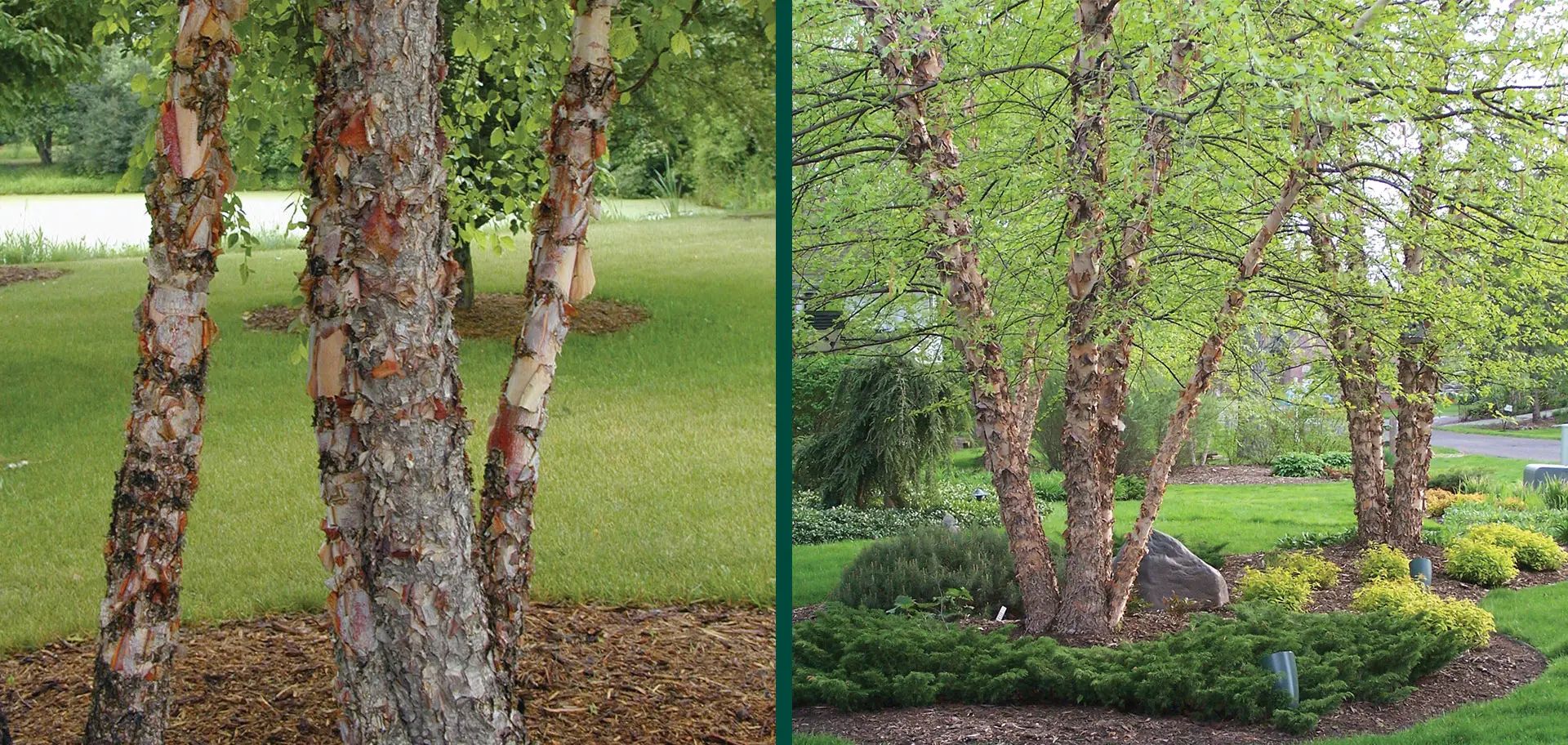
Photo: Johnson’s Nursery
Little bluestem (Schizachyrium scoparium): The native grass is the cornerstone of prairie ecosystems, growing 2 to 4 fee tall with slender, blue-green leaves that turn brilliant shades of red and orange in fall. Little bluestem’s airy seed heads persist into winter, providing shelter and food for birds and other wildlife. It prefers full sun and well-drained soils and is drought-tolerant once established, thriving in prairie restorations, meadows, and naturalized garden settings.
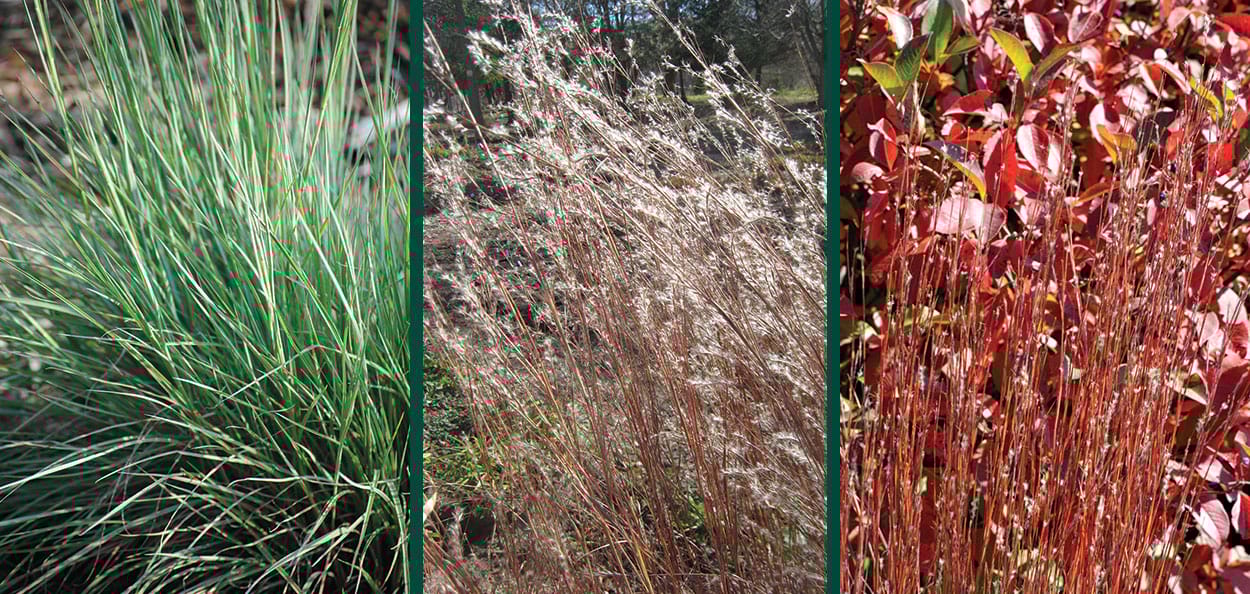
Photo: Heyden’s Gardens
Coneflower (Echinacea species): Blooming from mid-summer to early fall, coneflowers feature bold, daisy-like blooms with prominent, cone-shaped centers that attract countless pollinators, including butterflies, bees, and birds. These tough perennials generally reach 2 to 4 feet in height and thrive in full sun with well-drained soils. Coneflowers provide nectar and pollen at a crucial time when other blooms decline, and their long-lasting flowers also make excellent additions to cut flower arrangements. After blooming, the seed heads persist into winter, offering an important food source for a variety of birds during the colder months.

Photo: Johnson’s Nursery (Left) & Iowa State University Extension (Right)
Workshops and Volunteer Opportunities
Door County Conifers and the History of Christmas Trees
Join Crossroads at Big Creek for an engaging presentation exploring the beauty of native evergreen trees and the fascinating history behind Christmas trees.
Location: Collins Learning Center
Date: December 22 from 1:30 - 3:00 PM
Cost: Free and open to the public
Wreath Making Workshop
Come to The Ridges Sanctuary to create your perfect holiday wreath! We will provide the frames, wire, greens and decorative goodies for you to create your wreath or swag.
Wreath Making Workshops will be offered Friday December 5 and Saturday December 6. There will be six sessions total, with a session at 10:00 am, 12:00 pm, and 2:00 pm on Friday and Saturday. Each session will allow for 20 people at a time.
There is a $30 fee, which includes materials for 1 wreath. Additional wreaths and swags are $15 each. If you would like to recycle your frame from last year, the fee is $20. Pre-Registration is required for the 6 workshops so we can ensure we have enough materials for everyone. Learn more and register here: Events
Please dress in layers, we’re working in a garage!
126th Christmas Bird Count
The 126th Christmas Bird Count, held from December 14, 2025, to January 5, 2026, is the longest-running community science project in the world. Volunteers across North America come together to count bird populations, helping scientists track the health of bird species and guide conservation efforts. This yearly tradition welcomes birders of all experience levels to participate in a shared mission to protect wild birds and their habitats.
To learn more and find areas to be included in the count, go here: Christmas Bird Count
Or join the Ridges or Crossroads for their Christmas Bird Count events.
Conferences
The Prairie Enthusiasts
Join The Prairie Enthusiasts for their annual virtual conference happening February 18-20, 2026. This conference brings together people of various prairie and savanna knowledge-levels. Whether you have deep roots in prairie restoration or your passion for these habitats has just begun to bloom, there’s a place for you to learn with our community. Learn more about the conference and register here: Biodiversity from the Ground Up
Wisconsin Lakes and Rivers Convention
When tackling a monumental challenge, it sometimes takes a long time to see results. The 2026 Lakes and Rivers Partnership Convention will look back on the long-term programs and the accumulated actions of countless people that have persevered through many decades. Their dedication has ensured that the programs that developed in the 70’s, 80’s and 90’s are still with us in the 2020’s and beyond. We will also celebrate the people who will continue to carry the torch for water protection and restoration into the future.
This years conference is happening April 15 - 17, 2026 in Stevens Point, WI. Learn more about the conference and register here: Decades of Dedication
Invasive Species Forum
The virtual Invasive Species Forum is an annual event that brings attention to invasive species issues, research, and advances in prevention and management occurring across North America and beyond. The 2026 Invasive Species Forum will take place from February 17 - 19, 2026. Learn more about this event and register here: Progress Through Partnerships
News
Creating Habitat Under Trees
While it might be winter time, it’s never to early to think about landscaping around your property. Have you ever wondered what to plant under your trees beyond just grass or mulch? It turns out that space is full of potential to create a lively little ecosystem that supports pollinators, beneficial insects, and even helps your trees thrive. This easy-to-understand approach call “soft landings” shares how simple changes under your trees can bring life and beauty to your yard - and make a big difference for local wildlife. Check it out and discover how to give your trees a happy home. Soft Landings Add Life Under Native Trees
Door County Well Monitoring Program Results
The University of Wisconsin Oshkosh Environmental Research and Innovation Center (ERIC), in collaboration with the Door County Department of Public Health, will conduct a study to build a database of groundwater quality in Door County. The public is invited to attend this free forum to discuss the findings of the ongoing well program that started in 2019.
Event organizers will discuss the latest results, comparisons to previous years, and share some new initiatives. As always, there will be plenty of time for questions and discussion.
Date: December 9 from 6:00 to 7:30 PM
Location: The Collins Learning Center at Crossroads at Big Creek

Research
Promising News for Ash Trees
Exciting news coming out of Cornell University about ash trees! Researchers are pioneering efforts to propagate ash trees that show natural resistance to devastating emerald ash borer insect. By identifying and grafting from “lingering ash” trees that survive infestations, scientists are working to grow and eventually restore populations of ash trees that can withstand this invasive pest. this generational project combines advanced grafting techniques with long-term studies to develop resistant trees that can help revive ash populations critical to forest ecosystems. Read more here: Hope for Ash Trees
Fire on the Landscape
Fire plays a vital role in maintaining many landscape, like prairies and forests. These fires clear away old vegetation, recycle nutrients, and create open spaces that allow native grasses, wildflowers, and other plants to grow. This natural process supports diverse plant communities that evolved with fire and provides important habitat for wildlife. Without regular fires, invasive plants can take over, reducing biodiversity and changing the ecosystem. Prescribed fires today help mimic these natural cycles, sustaining ecosystems’ resilience and productivity.
Research from The Ohio State University found that annual fires created more variable, generally lower-intensity fire patterns when compared to biennial fires. This “pyrodiversity” was linked to soil microbial communities that differed more from place to place, even though the total number of species in each plot stayed about the same. In other words, burning more frequently didn’t wipe out soil life; instead, it created a patchier burn mosaic that supported greater diversity in how microbial communities are arranged across the landscape, which may help support healthy, resilient prairie ecosystems. Read the study here: Fire Frequency
Invasive Species News
Hemlock Woolly Adelgid: What to Look for This Winter
Hemlock woolly adelgid (HWA) is an invasive, aphid-like insect that poses a serious threat to eastern hemlock trees by feeding on their stored nutrients, which can weaken and eventually kill the trees. While HWA has become established in several states nearby, it has not yet been detected in Wisconsin. This winter is a great time for residents to help by keeping an eye out for the white, cottony egg sacs found at the base of hemlock needles—an early sign of infestation. Spotting and reporting potential HWA sightings can help protect Wisconsin’s native hemlocks and slow the spread of this destructive pest. If you suspect seeing HWA, contact the Wisconsin Department of Agriculture, Trade and Consumer Protection for guidance. Learn more about this species here: Hemlock Woolly Adelgid
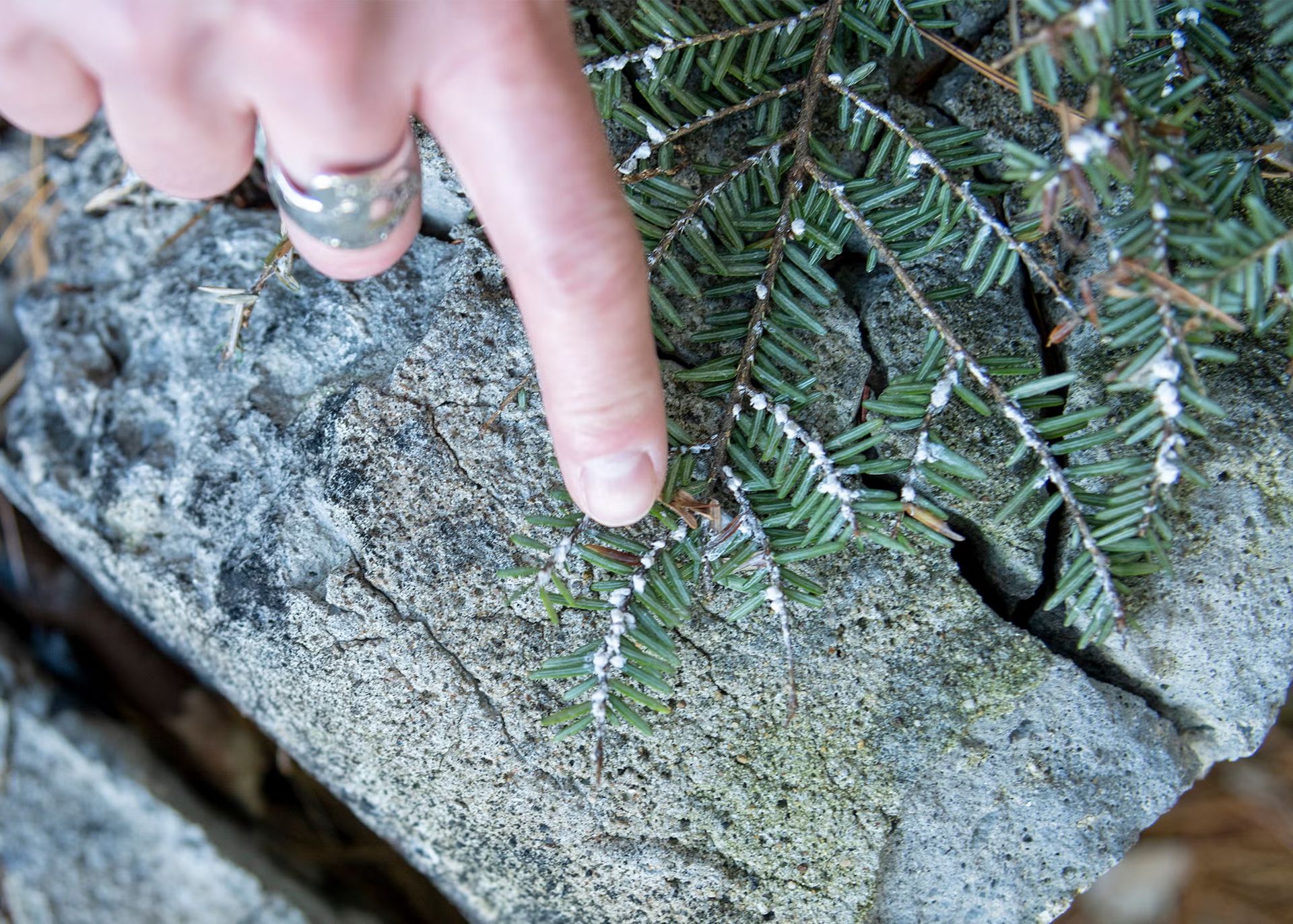
Photo: New York State Department of Environmental Conservation
Invasive Species Highlight
Flowering Rush: Beautiful but Invasive
Flowering rush is a striking aquatic plant that was once favored for its attractive umbrella-like clusters of pink flowers. Originally introduced as an ornamental pond plant, it has since escaped cultivation and invaded lakes, rivers, and wetlands across Wisconsin. the species forms dense, thick stands that crowd out native aquatic plants, degrade fish and wildlife habitat, and complicate recreational activities such as boating and fishing.

Photo: Peter M. Dzjuk, Minnesota Wildflowers
Flowering rush is identifiable by its long, sword-shaped leaves that emerge from thick rhizomes, and its showy flowers with three petals arranged in umbrella-shaped clusters on tall stalks. It typically blooms from June through August. While the flowers are beautiful, the plant’s aggressive growth and spreading rhizomes make it highly invasive. The roots are bulb-like and appear to “hug” or cup one another.

Roots of flowering rush
Photo: Gabriel Campbell, Bugwood.org
Because it spreads both by seed and rhizome fragments, flowering rush can quickly colonize new areas. It thrives in shallow waters with slow-moving currents and can tolerate a range of water depths and sediment types.
To help prevent the spread of flowering rush”
Avoid planting it in private water gardens or ponds
Inspect and clean boats, trailers, and equipment after use - especially when moving between water bodies
Report sightings through the EDDMapS or contact DCIST
In Wisconsin, flowering rush is listed as restricted under NR 40, meaning it may not be sold, transported, or introduced into the wild.
For more information on flowering rush and how to identify it, visit: https://www.dnr.state.mn.us/invasives/terrestrialplants/herbaceous/floweringrush.html
Get Involved
DCIST relies on volunteers to help collect data on where invasive plants and animals are found in Door County. If you’re interested in helping, DCIST can provide training on the use of handheld GPS units or you can also use the GLEDN app to report findings via your smartphone. Contact DCIST at [email protected] for more information or learn how to download and use the app at https://fyi.uwex.edu/wifdn/. Keep an eye out for our next newsletter and keep up to date on our DCIST website at https://doorinvasives.org. We will be posting any and all additional training opportunities & educational materials as we receive them.
Stay in touch!
The Door County Invasive Species Team – Jason Miller, Coordinator
DCIST Message Line: 920-746-5955
Email: [email protected]
Check out our website at https://doorinvasives.org